Kasparov’s Immortal, the Greatest Chess Game of the Twentieth Century • Kasparov vs Topalov • Hoogovens Open • Wijk aan Zee, Netherlands (1999) • Pirc Defense (B07)
 Francisco Yepes Barrera 2 min read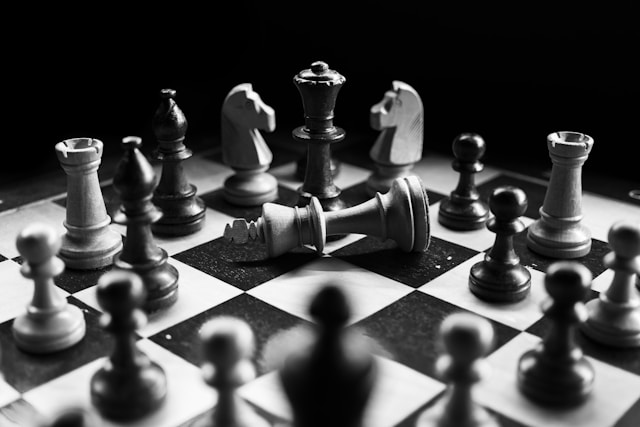
Felix Mittermeier - https://unsplash.com/photos/chess-pieces-on-board-nAjil1z3eLk
On January 20, 1999, at the Wijk aan Zee Chess Tournament in the Netherlands, Gary Kasparov and Veselin Topalov sat opposite each other. Topalov was one of the best players in the world at the time of the match.
The audience present had no idea what a masterpiece they were about to witness. There was a long round of applause for Kasparov when Topalov resigned.
According to chess.com, this is the best chess game ever played.
This is the famous Kasparov–Topalov, Wijk aan Zee 1999 game—often called the “Kasparov Immortal”.
Kasparov plays the aggressive B07 Pirc/Modern setup with 6.f3, preparing g4 and an attacking kingside build-up.
The game explodes after g4–g5, and Kasparov sacrifices material for long-term attacking chances against Black’s king.
The pivotal moment comes around moves 24–28, where Topalov’s counterplay falters, and Kasparov starts weaving together multiple threats: queen infiltration, rook lifts, and bishop activity.
Kasparov’s precise coordination of queen, rooks, and minor pieces eventually leads to a decisive mating net.
Stockfish evaluation jumps dramatically in Kasparov’s favor after a key error by Black, e.g., 24…cxd4??, showing the danger of miscalculations in the middle game.
28.Qc3?? is a tactical slip—Kasparov could have played Ra7 to immediately threaten the Black king. Despite the slip, White’s activity and coordination keep the initiative; Black’s king is exposed and under siege.
The final sequence starting 40.Qa8 until checkmate demonstrates a textbook demonstration of coordination and zugzwang: Kasparov systematically removes Black’s defensive resources and converts his attack into a clean win.