 Francisco Yepes Barrera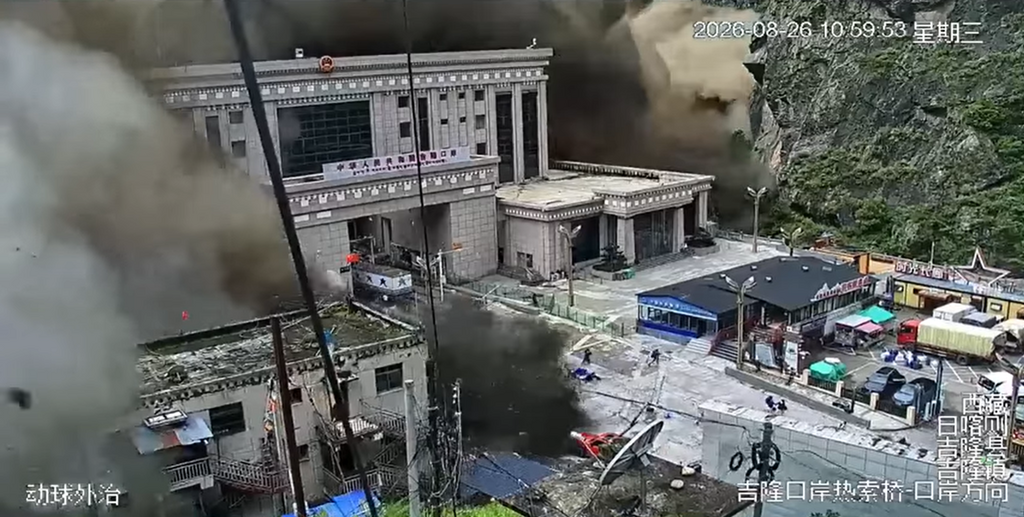
https://commons.wikimedia.org/wiki/File:Mudslide_at_Gyirong_Port_2_(screenshot).png - Public domain
This article was published in Italian on LinkedIn under the title “Il Data Sharing salverà il mondo? No ma potrebbe.” Except for the English translation and editing needs, no changes were made to the original article. Published with permission of I-CON.
The author, Giampietro Gagliardi is a communication, HR coaching, marketing, and digital education specialist.
Table of Contents
Introduction
The recent devastating floods in Nepal present us with an increasingly frequent question, almost a conditioned reflex of our hyper-technological age: with all the advanced tools at our disposal, why didn’t artificial intelligence predict the disaster in time to avert the tragedy?
The short, but crucial, answer is that we’re asking the algorithm to do the work of a fortune teller.
The Illusion of Perfect Forecasting,
Despite what we tell ourselves, predictive AI is not a crystal ball. It doesn’t possess the ability to give us a countdown clock, indicating with pinpoint accuracy that a specific dam will fail “next Tuesday at 3:32 PM.” And, from an engineering and risk management perspective, that shouldn’t even be our primary goal.
What neural networks and complex machine learning models can do with unprecedented accuracy is analyze enormous volumes of historical patterns, real-time climate variables, soil saturation rates, and geological features. Their job is not to tell us when collapse will occur to the second but whether an extreme event will occur in a given territorial setting. They provide us with risk maps, probabilistic projections, and scenarios with extremely high statistical reliability.
This gap between the “exact when” and the “almost certain if” is not a technological limitation of the machine but rather a human imperative to act. Knowing that a specific valley or river basin is statistically destined to end up under water in the face of certain thermal anomalies must be enough for us. This information must serve as a trigger to secure the territory with immediate urgency. We must stop chasing the event with the logic of emergency management and start preventing structural damage by reinforcing embankments, redesigning drainage networks, and limiting land use in the red-flagged areas identified by the algorithm.
The Stopped Engine: When the Fuel of Data Is Missing
However, there’s a giant elephant in the room. AI, no matter how sophisticated and trained, is like a high-performance engine that idles if deprived of its essential fuel: data. And it’s precisely at this critical juncture that technology ceases to be pure mathematics and collides violently with geopolitical complexity and the limits of bureaucracy.
The recent tragedy in Nepal highlights a structural vulnerability that goes far beyond the uncontrollable force of pouring rain and monsoons. Most of the river systems that flow through Nepal’s valleys are transboundary in nature. Many of these rivers originate beyond the country’s borders, in vast mountain basins controlled by neighboring nations located upstream.
The physics of fluids is inexorable, but so is data processing: if those upstream fail to collect, or worse yet, fail to share, timely hydrometric measurements, reservoir levels, and rainfall data, those downstream are effectively left blind. There’s no supercomputer or predictive neural network in the world capable of sounding an early warning if it’s denied crucial input data from high altitudes. In these cases, catastrophe occurs not just due to nature’s fury but also in the artificial silence of non-communicating servers.
The Imperative of Data Sharing and the Virtuous Example of Space
This dynamic leads us to a crucial professional and ethical reflection on the concept of data sharing and true data freedom. In an era marked by a global climate crisis, withholding environmental data by invoking strict national sovereignty, or locking it away in non-interoperable silos for vested interests, is anachronistic and dangerous. Water does not recognize political boundaries drawn on geographical maps; consequently, the data needed to monitor its flow and prevent disasters should not recognize them. We need hydropolitics based on sharing.
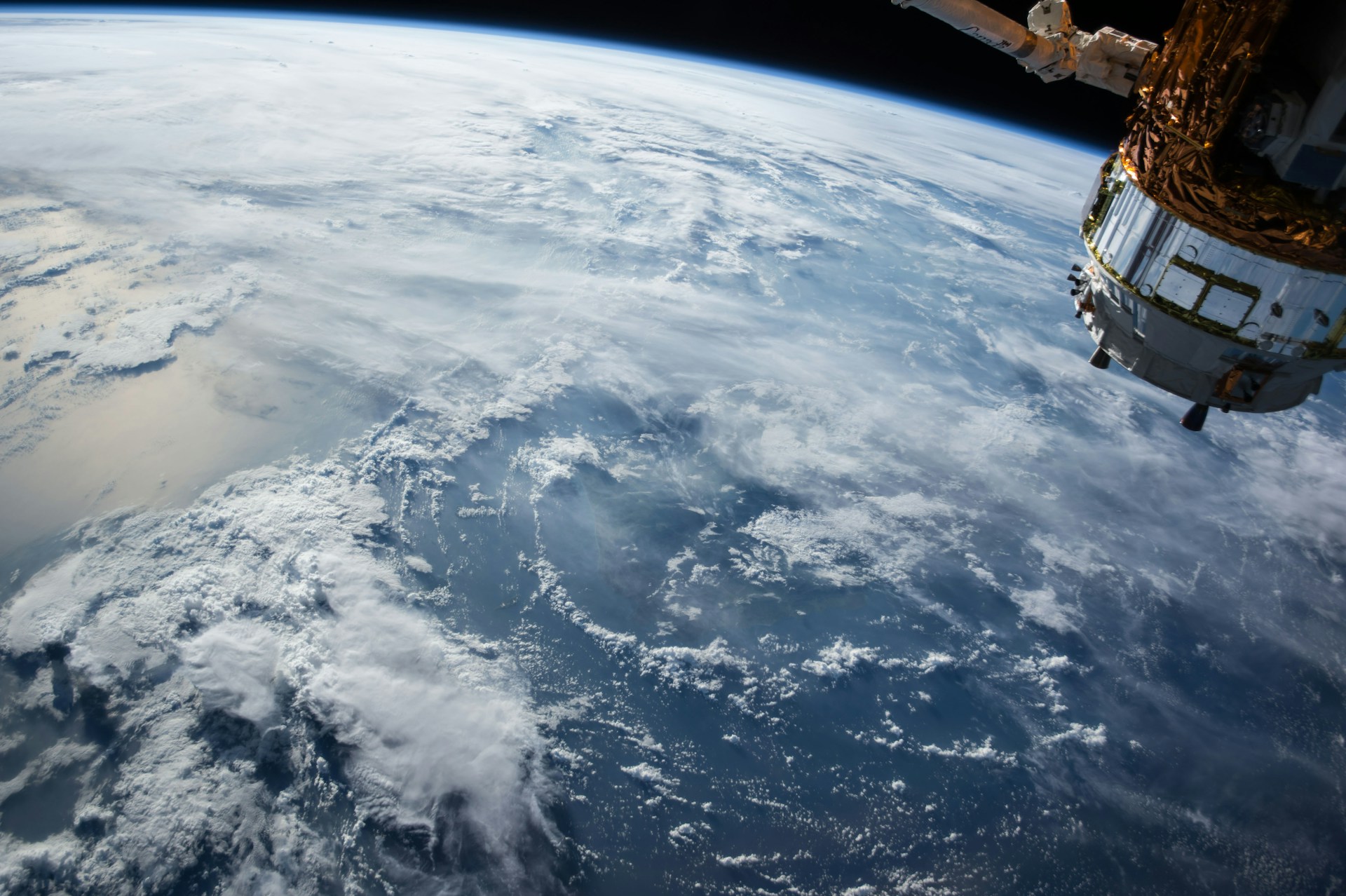
Fortunately, the technological ecosystem already offers virtuous models that point the way forward. The European Space Agency (ESA), for example, is a beacon in this field. Through its Earth observation satellite programs, ESA provides terabytes of data daily in a strictly open-source manner.
Land cover maps, synthetic aperture radar images capable of “seeing” through clouds, millimetric measurements of soil moisture: all this wealth of information is made freely available.
This democratization of data is the true enabling factor. It’s what allows researchers, independent organizations, and technology companies to develop life-saving predictive solutions anywhere in the world, overcoming local vetoes and filling the information gaps left by restrictive policies.
Conclusion
All of us know perfectly well that digitalization for its own sake is not enough. Creating digital solutions means first and foremost building architectures where data can flow freely and securely, fueling intelligent decision-making models.
Artificial intelligence is an extraordinary tool for deciphering the complexity of the natural and industrial world, but its true potential only unfolds within an open, collaborative, and transparent ecosystem. System interoperability is not just a best practice in the IT industry; it is becoming a fundamental pillar for the resilience of our communities.
The Nepal disaster leaves us with a stark and unequivocal warning: to defend our lands, we must not passively wait for technology to deliver the exact date and time of the next catastrophe. We must act now, leveraging the awareness of the risks that AI already provides us, urgently investing in securing our infrastructure. And, above all, we must break down digital barriers and free data. Because while artificial intelligence can’t predict the future like a crystal ball, freely sharing data can undoubtedly help us change it and save lives.